The Suzuka Moment the Paddock Will Not Unsee: Bearman's 50G Warning
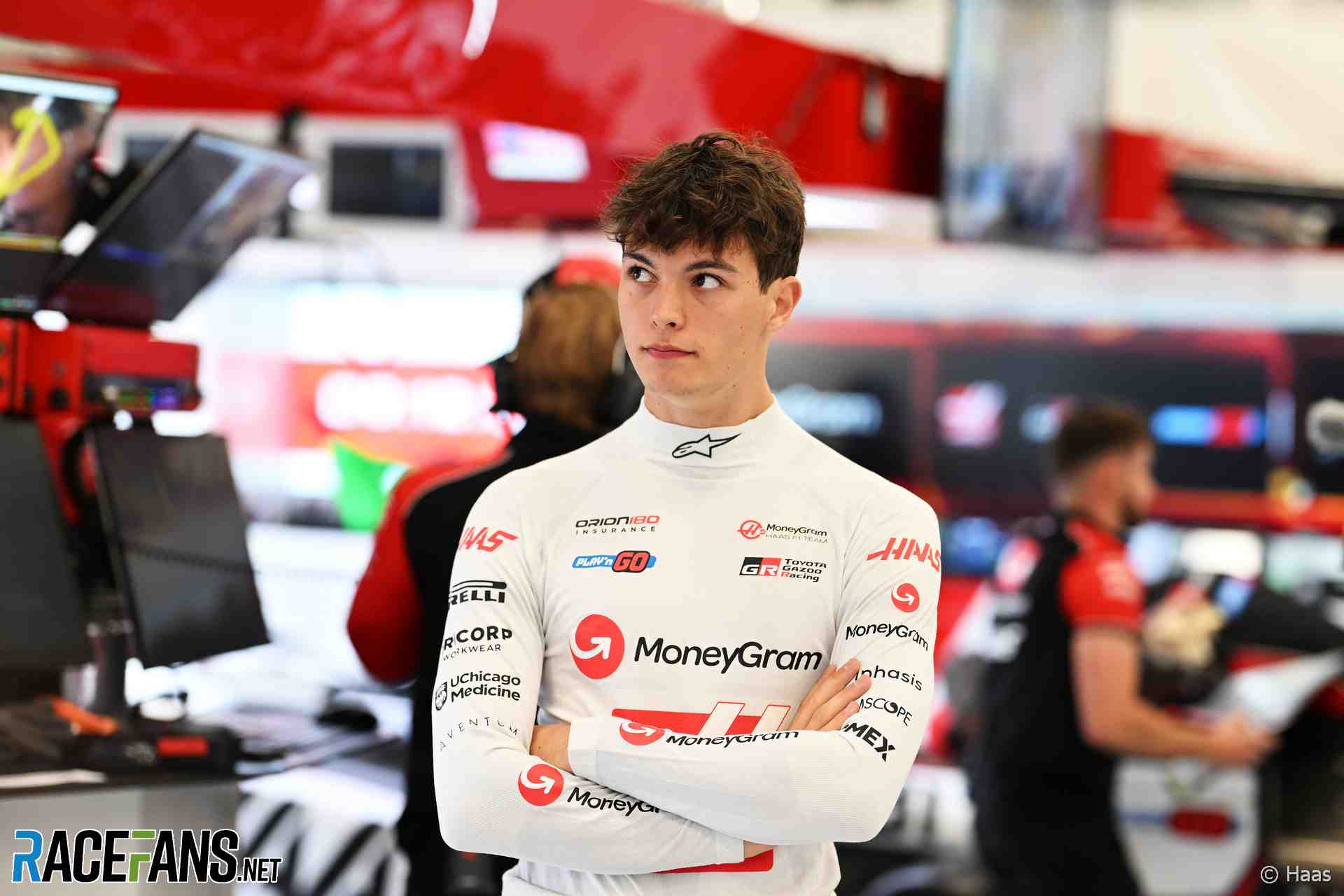
Oliver Bearman's 50G crash at Suzuka has become the reference point for everything drivers have been trying to warn the FIA about since pre-season. The 2026 regulations produce closing speeds that are not created by racing — and the moment those speeds meet a blind corner, nobody is in control.
Formula 1 got the moment it feared at Suzuka. Oliver Bearman's 50G impact at Spoon was not produced by a racing incident in any traditional sense. It was produced by the 2026 energy rules — by two cars arriving at the same braking zone with completely different deployment states. And it is now the single loudest argument on the paddock's side of the FIA's emergency rule meetings.
The sequence was clinical. Bearman was closing on Franco Colapinto's Alpine on the run down to Spoon, the left-right flick at Suzuka where commitment decisions are made early and the margin for adjustment is almost nothing. Colapinto's car was in a heavy harvest phase, down about 45 km/h on its entry speed as the battery recovered energy. Bearman's car was on full power. The closing rate between the two, produced entirely by their battery states, consumed the usable space before Bearman had time to react.
The result was a 50G impact with the barrier.
→ More Formula 1 news, results and analysis at News Formula One
What has elevated the incident from a single accident to a systemic argument is that drivers have been describing exactly this scenario since pre-season testing. Fernando Alonso, speaking ahead of the Japanese Grand Prix, put it in terms that have held up almost verbatim since. "There is no fun. Overtakes now are unintentional," Alonso said. "You find yourself with superior battery to the car in front, and either you crash into them or overtake them. It's more of an evasive maneuver than an overtake."
Bearman did not overtake Colapinto at Spoon. He was trying not to hit him. The closing rate he had to manage was not, in any meaningful sense, a driving challenge. It was an arithmetic one.
That is the core of the problem. Under the new 50/50 combustion-electric power split, drivers are forced into specific harvest windows on the lap to replenish the energy they spend in the deployment zones. The windows are not synchronised between cars. Two drivers half a second apart in practice can hit the same corner on back-to-back laps with totally different battery profiles, producing closing-speed deltas that are generated by regulation, not by racing.
→ More Formula 1 news, results and analysis at News Formula One
The Japanese Grand Prix did deliver genuinely encouraging racing elsewhere. Oscar Piastri's McLaren jumped both Mercedes at the start and held Russell back through the first stint with some intelligent battery management. Charles Leclerc ran Ferrari into podium contention. Six different cars looked capable of winning on the day. The Mercedes domination of qualifying did not fully translate into the race. By the standards of the paddock, these are positives.
But the Bearman incident sits apart from that. The emergency FIA summit last week, the rule refinements approved for the Miami Grand Prix, and the FIA's decision to specifically address the boost-differential scenario all point to the same conclusion — regulators understand the problem is structural, not incidental.
Lando Norris, who has been among the more vocal drivers on the cockpit's limited control over deployment, captured the frustration in his Suzuka debrief. McLaren has pointedly avoided taking public positions on many aspects of the 2026 rule set, but on the question of driver agency over energy use, the team's drivers have not held back.
→ More Formula 1 news, results and analysis at News Formula One
Whether the Miami package solves the Bearman problem is the next question. The changes target the most extreme boost deltas, but the fundamental physics of one car harvesting while another is on full power at the entry to a committed corner does not disappear with a firmware update.
Bearman walked away. Everyone involved knows the next version of this crash might not have the same ending. The paddock wants the rules changed. The FIA has started. Whether either move has gone far enough will be answered in Miami.
---
→ More Formula 1 news, results and analysis at News Formula One
*Originally published on [NewsFormula One](https://newsformula.one/article/bearman-suzuka-50g-warning-2026-regulations-alonso-harvesting-overtakes). Visit for full coverage.*
This story was written by News Formula One.
Read the latest Formula 1 news, results and analysis on NewsFormula.one →